A Bookbinder’s Compendium: Workshop Handouts 2001-2025 by Karen Hanmer.
Glenview, IL: Karen Hanmer Book Arts, 2026.
private collection, California
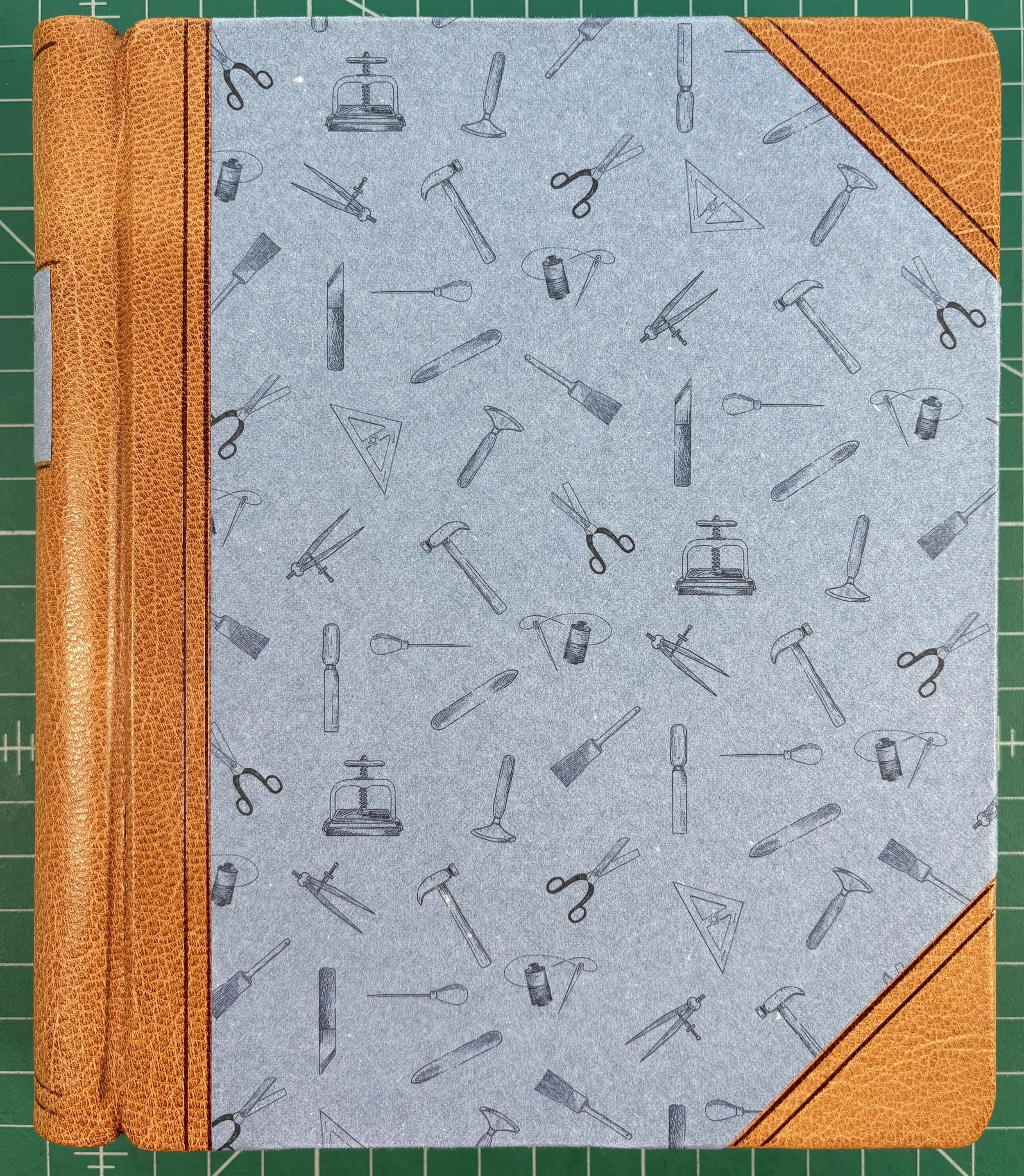
English-style springback binding: half goatskin, blue Swedish marbled endsheets, boards covered in Katie MacGregor handmade paper inkjet-printed with Illustrations by Henry Maron of tools used in traditional bookbinding. Bound 2026.
8 ¾ x 7 ½ x 1 ¾ “
This is the third bound copy of an anthology of thirty-three workshop handouts written by the binderon topics including fine binding, a range of historical and contemporary structures, notes on materials, and professional practices.
This text is available in printed, unsewn sheets.
A Bookbinder’s Compendium: Workshop Handouts 2001-2025 by Karen Hanmer.
Glenview, IL: Karen Hanmer Book Arts, 2026.
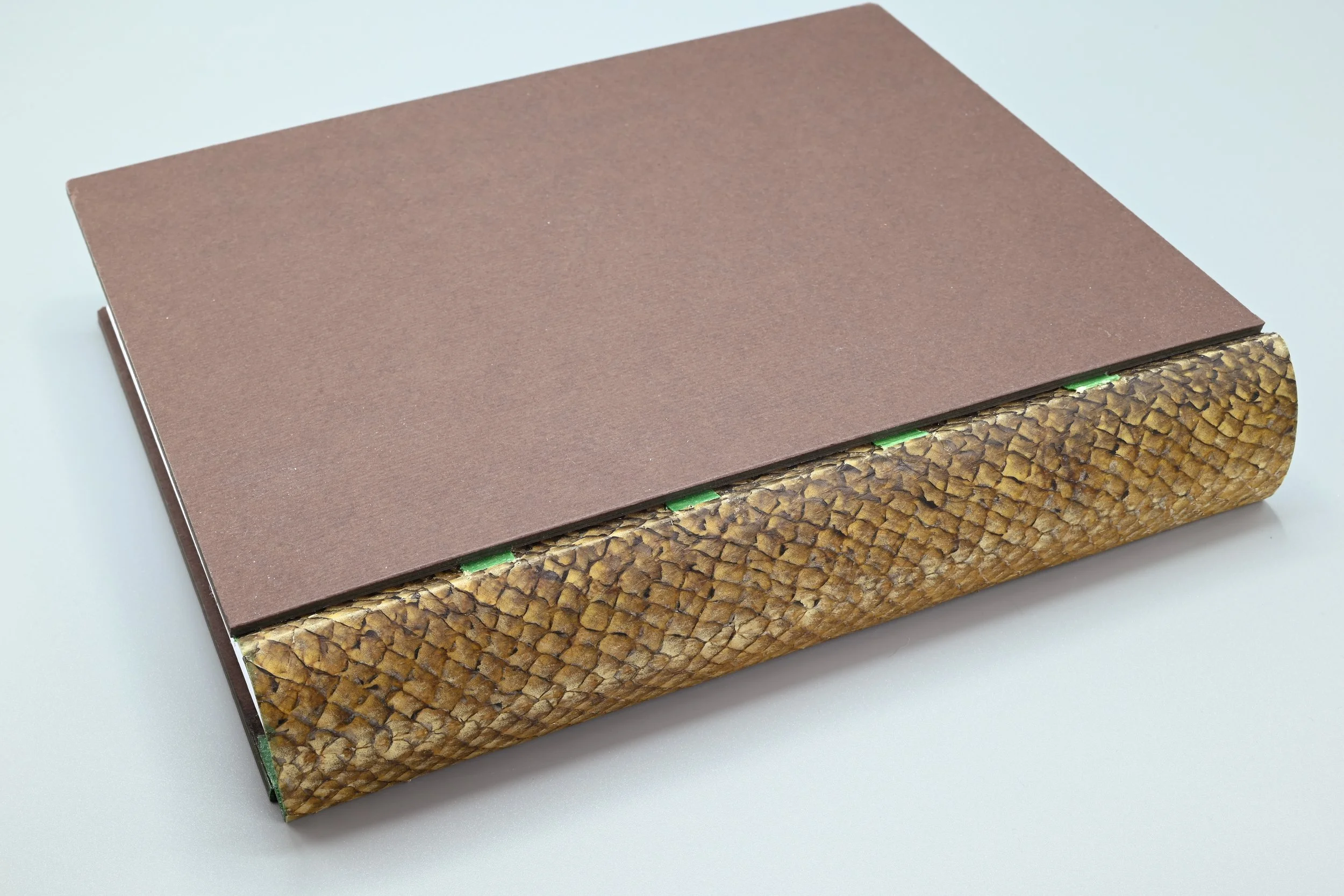
Even More Simplified binding: spine wrapper of Atlantic salmon parchment processed by the binder and dyed in pomegranate and logwood. Boards a laminate of multicolored Murillo paper, sewn on vellum supports laced in and out at the shoulders. Hahnemuhle Ingres endsheets. Rolled paper endbands. Headcaps and sewing supports colored with mica-infused watercolor. Bound 2026.
8 ¾ x 7 ⅜ x 1 ¾ “
This is the second bound copy of an anthology of thirty-three workshop handouts written by the binderon topics including fine binding, a range of historical and contemporary structures, notes on materials, and professional practices.
This text is available in printed, unsewn sheets.

Leather Binding Techniques: Fine binding sewn on stubs plus edge decoration intensive
June 8-13, 2027
9:30 am-5:30 pm instruction, with open studio until 7:30 pm
The basic structure of a fine leather binding has changed little over the past 300 years. The text block is sewn onto supports, the spine carefully shaped, and the boards laced on. The book is covered in leather that has been precision-pared for protection, flexibility, and a sumptuous presentation.
This workshop will begin by crafting a library of edge decoration samples. The text block will be sewn on stubs; leather-jointed endpapers and hand-sewn, multi-colored endbands will be added; and forwarding and covering will continue for rounded, backed, full leather fine binding. Additional decorative techniques will be incorporated as time permits.
A partial list of required tools: Scharfix, spokeshave, paring knife + strop.
Note: This is a fast-paced, advanced-level workshop for students experienced with traditional binding. Prerequisites: Leather Binding I: Fundamentals, II: Raised Bands, and III: Fine Binding or equivalent. Students should be making leather bindings independently, outside a workshop setting. Please contact me if you are unsure if this workshop is the right fit for your current skills, or an appropriate stretch if you're ready for your next challenge.
Workshop fee includes complete supplies with a book in sheets comparable to those available on this site.
This is an in-person workshop. Details on travel, lodging, and working in the studio in FAQs
Payment in full is due at time of registration. See FAQs for refund policy.