
 Image 1 of 4
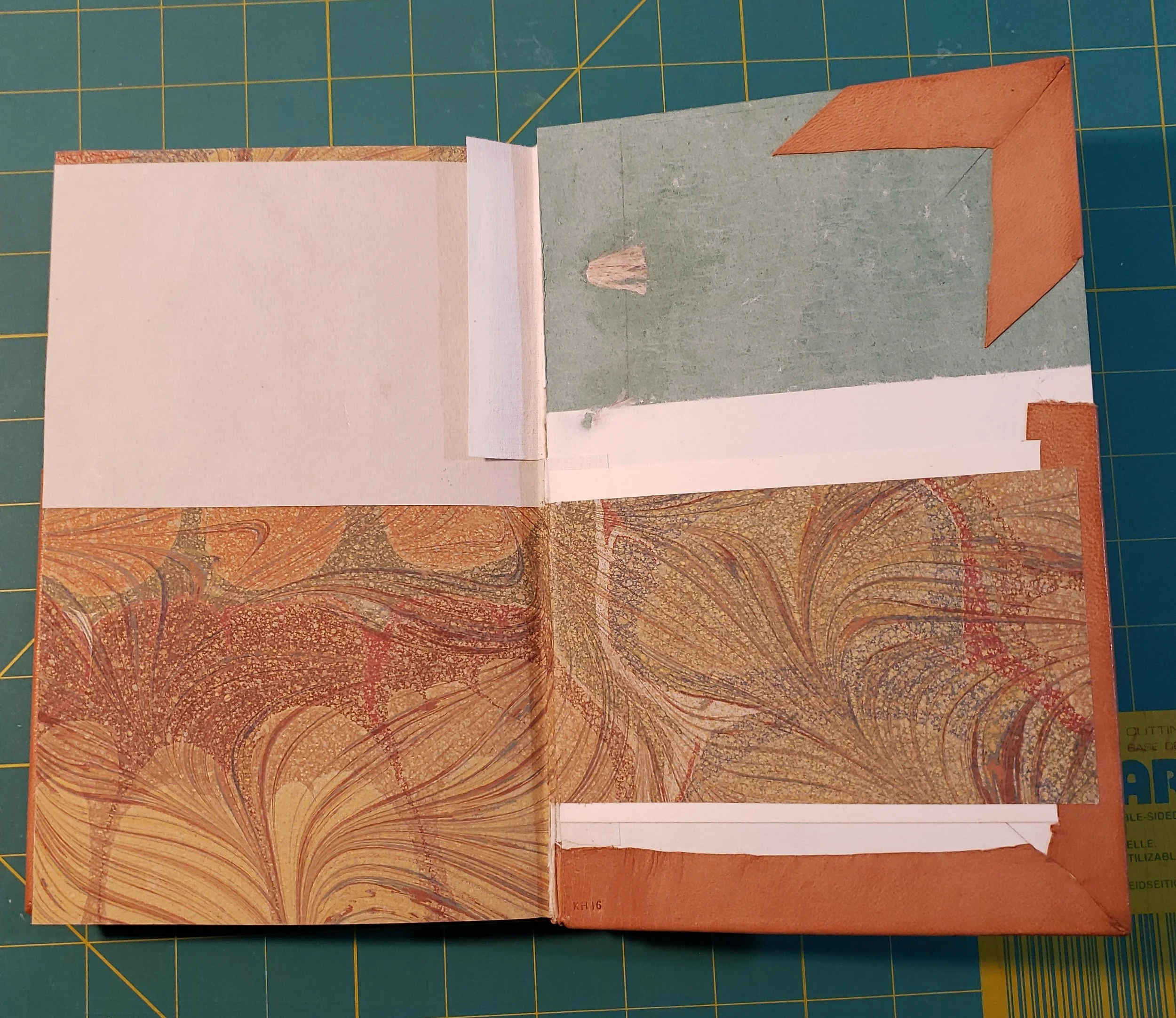 Image 2 of 4
 Image 3 of 4
 Image 4 of 4
Binding structure model, including templates for punching sections and for cutting and paring leather
The basic structure of a fine leather binding has changed little over the past 300 years. The text block is sewn onto supports, the spine carefully shaped, and the boards laced on. The book is covered in leather that has been precision-pared for protection, flexibility, and a sumptuous presentation.
This year’s topic is crafting a cutaway model of a full fine leather binding. The book will be covered in leather only halfway up so the construction remains visible for future reference. Features include hand-sewn endbands, champhered boards, marbled flexi endsheets with hidden cloth hinges, the “inner hinge” variation on the loose guard (found in Laura Young’s Bookbinding and Conservation by Hand), and a hollow tube on the spine.
You will find this cutaway model invaluable for teaching bookbinding or for refreshing your memory on aspects of book structure. For those who delight in the engineering aspects of binding, the binding’s visible structure will make as lovely a design as any assortment of inlays, onlays, tooling.
These models were made as demos while teaching a bookbinding workshop. They may include marks or notes made to aid students. Colors and patterns will vary. Cutaway bindings revealing structural features are sometimes available.
Binding structure model, including templates for punching sections and for cutting and paring leather
The basic structure of a fine leather binding has changed little over the past 300 years. The text block is sewn onto supports, the spine carefully shaped, and the boards laced on. The book is covered in leather that has been precision-pared for protection, flexibility, and a sumptuous presentation.
This year’s topic is crafting a cutaway model of a full fine leather binding. The book will be covered in leather only halfway up so the construction remains visible for future reference. Features include hand-sewn endbands, champhered boards, marbled flexi endsheets with hidden cloth hinges, the “inner hinge” variation on the loose guard (found in Laura Young’s Bookbinding and Conservation by Hand), and a hollow tube on the spine.
You will find this cutaway model invaluable for teaching bookbinding or for refreshing your memory on aspects of book structure. For those who delight in the engineering aspects of binding, the binding’s visible structure will make as lovely a design as any assortment of inlays, onlays, tooling.
These models were made as demos while teaching a bookbinding workshop. They may include marks or notes made to aid students. Colors and patterns will vary. Cutaway bindings revealing structural features are sometimes available.