
ARTISTS’ BOOKS | Place & Time
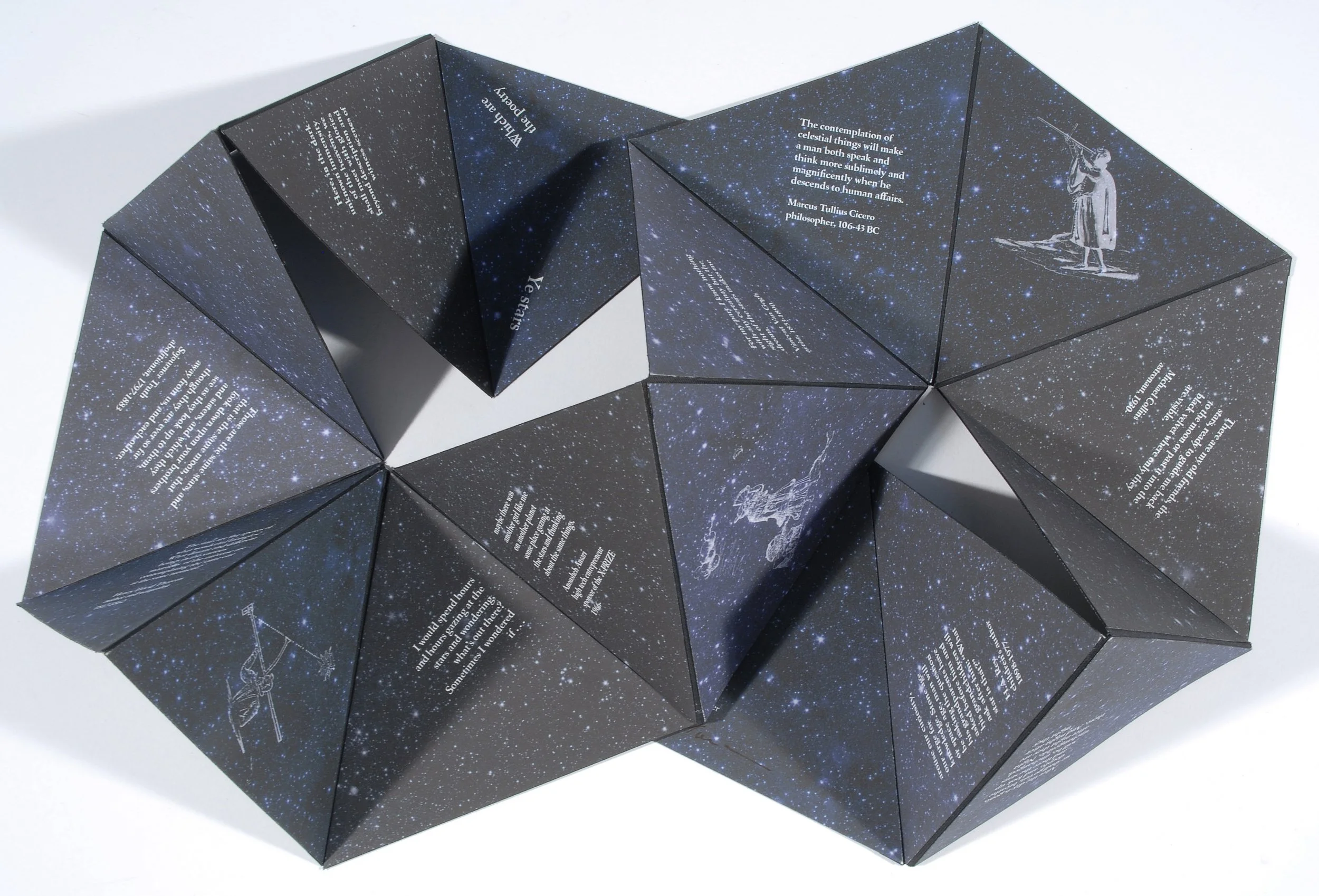
Star Poems
Pigment inkjet prints hinged with unbacked book cloth. Created 2008.
6.75x5.75x.75" closed, 17.5x 23" open
Edition of 30
Please note this piece is made to order and may not be available for immediate delivery. Normal turn-around time is three months.
At once vast and minimal, sparse and rich, the night sky has always been a canvas upon which people project their myths and dreams. Star Poems presents quotes that document response to the night sky across the ages by philosophers, artists, and poets from Plato and Byron to contemporary writers, scientists and astronauts. This text is paired with 17th century mythological images of constellation forms and images of early star gazers on a background of a NASA photograph of the Milky Way. The book can be held in the hand and read page by page like a traditional book, can be removed from its jacket and unfolded flat to reference historical astronomical charts or contemporary NASA composite photos, or can be folded into an infinite variety of sculptural shapes.
For our entire existence as a species, we have looked to the heavens. In the night sky we see possibilities, a map to our future, a document of our past. The panorama of deep space comprises a powerful metaphor, and in two books ... the metaphor is used to ample effect both conceptually and structurally. Celestial Navigation and Star Poems share the same structure and compositional background: a series of hinged triangle with start fields printed on deep blue. Each may be read as a traditional accordion fold, formed into myriad sculptural configurations, or unfolded flat as a kind of map referencing historical and contemporary astronomical charts.
Star Poems consists of astronomical quotes by historical and contemporary philosophers, scientists, artists, and poets paired with 17th century images of astronomers and constellations. The cover quote by Lord Byron, 'Ye stars / which are the poetry / of heaven,' is divided in three, with each part placed at the corners of the triangle, inviting the viewer to begin at any of the three corners. The effect is that one may travel in any direction through the vastness of heaven and encounter the profoundness of eternity, as if meaning were embedded in the environs of space itself, to be reflected and mediated through human synthesis.
— Max Yela, Head, Special Collections, University of Wisconsin Milwaukee

Celestial Navigation
Pigment inkjet prints
6.75x5.75x.5" closed, 17.5x 30" open
Edition of 30, out of print.
Created 2008
At once vast and minimal, sparse and rich, the night sky has always been a canvas upon which people project their myths and dreams. In Celestial Navigation a photograph of the Milky Way provides the background for an illustrated catalog of instruments used across the ages to navigate by the stars, and a 19th-century astronomical chart.
This historical content is complemented by a brief poem in which the artist looks to the night sky to recapture the memory of a long lost beloved. Celestial Navigation is constructed of ink-jet printed, hinged triangles that can be held in the hand and read page by page like a traditional book. Unfolded flat, it references historical star charts or contemporary NASA composite photographs. The book can also be folded into myriad sculptural shapes. For our entire existence as a species, we have looked to the heavens. In the night sky we see possibilities, a map to our future, a document of our past.
The panorama of deep space comprises a powerful metaphor, and in two books ... the metaphor is used to ample effect both conceptually and structurally. Celestial Navigation and Star Poems share the same structure and compositional background: a series of hinged triangle with start fields printed on deep blue. Each may be read as a traditional accordion fold, formed into myriad sculptural configurations, or unfolded flat as a kind of map referencing historical and contemporary astronomical charts.
In Celestial Navigation, the narrative evokes a deep sense of loss and longing; reaching to the stars as a way of recapturing the memory of the long-departed: 'Like ancient navigators, I look to the sky to find my way back to you.' . The diamond-shaped page-spread offers text printed against a star field on the left, mirrored by a 19th-century star chart on the right. The one-point rhythm of each page spread progresses steadily, and is resolved by a final spread of uniform space in which one can almost discern the presence of the beloved. The book has three possible spaceways: the textual narrative occupying one path, and the other two taken up with lists of astronomical instruments - particularly instruments of navigation - juxtaposed against 17th-century images of astrolabes, sextants, telescopes, and the like. — Max Yela, Head, Special Collections, University of Wisconsin Milwaukee

Most Excellent Canopy
Pigment inkjet prints
6 x 5” closed
10 x 10" open
Edition of 100
Two quotes about the beauty of the stars open to reveal an image of an early star gazer against the night sky. Six constellations are represented by punched holes as they appear in the winter sky over North America. Created 2008.

Mirage
Pigment inkjet prints, drum leaf binding, title stamped on spine. Created 2009.
5 x 7 x .5"
series of 100, each unique
A journey across a rural Midwestern landscape of both space and time.
Mirage is winner of the award for best 3D entry in the 2010 Midwestern Biennial exhibition at the Rockford Art Museum, Rockford, IL.
Karen Hanmer’s Mirage reflects those hot late-summer road trips when the crops are tall, the days long and hot, the air dusty, and the road flat and straight, punctuated only by farms racing by in a blur. Hanmer, no stranger to themes of the rural Midwest, captures the essence of those trips in dreamy imagery wrapped in a skillfully crafted minimalist structure that does not intrude on the experience. An essential companion to Hanmer’s other works such as Bluestem, Prairie, Homestead, Flip Farm, and Bequest.
— Peter D. Verheyen, bookbinder/conservator, publisher of the Book Arts Web and The Bonefolder.
Karen Hanmer's Mirage beautifully represents the concepts of time and motion through a sequence of dreamlike images that whirl across the pages. The photographs, blurred as if taken from a speeding car, describe place and memory in a manner that is melancholic yet detached. The book is a diary of sorts, documenting the quickly passing and often unperceived moments that later prompt recollection.
— Jeff Rathermel, Artistic Director, Minnesota Center for Book Arts

Big River
Pigment inkjet prints, binders' board, plexiglass, ball bearings
10.75 x 8.75 x 1.25"
Edition of 20
Like the child’s pocket game, the viewer maneuvers the box to get each of the balls into a divot corresponding to a city mentioned in the Johnny Cash song, Big River, where the lovesick narrator chases his beloved down the Mississippi River, missing her at every port. Created 2004.

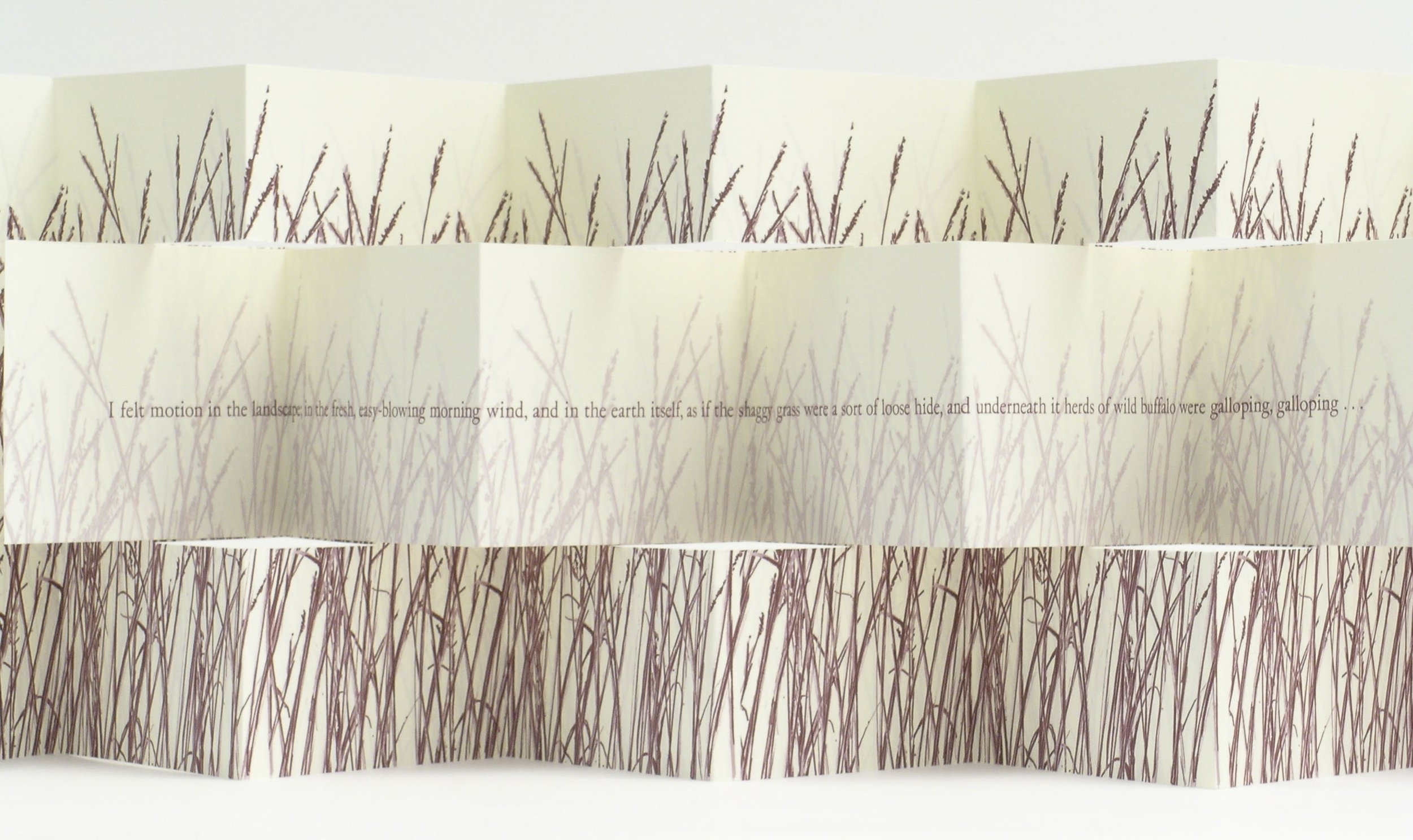
Prairie
Pigment inkjet prints. Illustration in collaboration with Henry Maron, folded structure learned from Peter Thomas. Created 2006.
6x3x.2" closed, 8x15x2.5" open
edition of 100. out of print
Edition of 100 Inspired by Willa Cather’s My Antonia, and includes quote from the text : “I felt motion in the landscape; in the fresh, easy-blowing morning wind, and in the earth itself, as if the shaggy grass were a sort of loose hide, and underneath it herds of wild buffalo were galloping, galloping . . .”

Fragments of Capri
Pigment inkjet prints, gold-stamped vellum spine. Created 2011.
5.5 x 4 x .5”
unnumbered series of 100, pages and cover wrappers vary
16 pages
The painting that hung over the bookmaker’s childhood sofa; photographed, digitally printed actual size, deconstructed, and bound using the drum leaf structure. The pocket-size format references travel guidebooks. Fragmented glimpses of the painting may also function as metaphor for memory, and the unanswered questions that elude memory. What importance does a painting hold when it is the only work of art a family owns? What role does that painting play in one’s consciousness when it has become so familiar it is an unnoticed part of the household landscape. What clues about the family’s history might the painting hold? Where, when, why was it acquired? Or maybe, to paraphrase Freud, sometimes a painting is just oil on canvas…
What an exquisite little book....delicate colors blending softly over the cover, wedges of cloud smeared skies, placid blue water, the pastel angles of cliffs, a small boat dancing over gentle waves, smudges of leaves and branches curled against the grassy hillsides....a world of peaceful scenes caught once by the artist’s brush and now again, transformed in this charming little book. Memories overlapping on each page. This is a work of art that refreshes and inspires.
—Picasso Gaglione, mail art pioneer and Fluxus historian

Horizons… Capri
Pigment inkjet prints, gold-stamped vellum spine. Created 2011.
5.5 x 8 x .5”
unnumbered series of 30, cover wrappers vary
16 pages.
The painting that hung over the bookmaker’s childhood sofa; photographed, digitally printed actual size, deconstructed, and bound using the drum leaf structure. When this view of the island of Capri overlooking the Gulf of Naples is divided into eight equal portions, each portion still reads as a horizon. A fragmented walk through the landscape may also function as metaphor for memory, and the unanswered questions that elude memory.
With her latest project, Karen Hanmer has created an archetype of all the family oil paintings that hung above the couches of our childhood. Not a drop of irony stains the languid shorelines and gauzy, cloud-flecked skies that fill the pages of this inviting book. Hanmer instead chooses to treat her subject with a candid reverence that raises intriguing questions about how we assign value to the objects that circumscribe our lives and how memory impacts that process.
—Vera Scekic, Chicago painter and curator


Crystals
Carousel book: Pigment inkjet prints
7 x 14 x 7" open
7 x 7 x 3/4” closed
Edition of 20. Out of print. One gently worn exhibit copy available.
This carousel book tells the story of the sensuous pleasures of a straight-laced child’s twilight summer walk to the candy store to purchase caramel “bull’s eyes,” in the company of the free-wheeling children from the family next door. Created 2000.
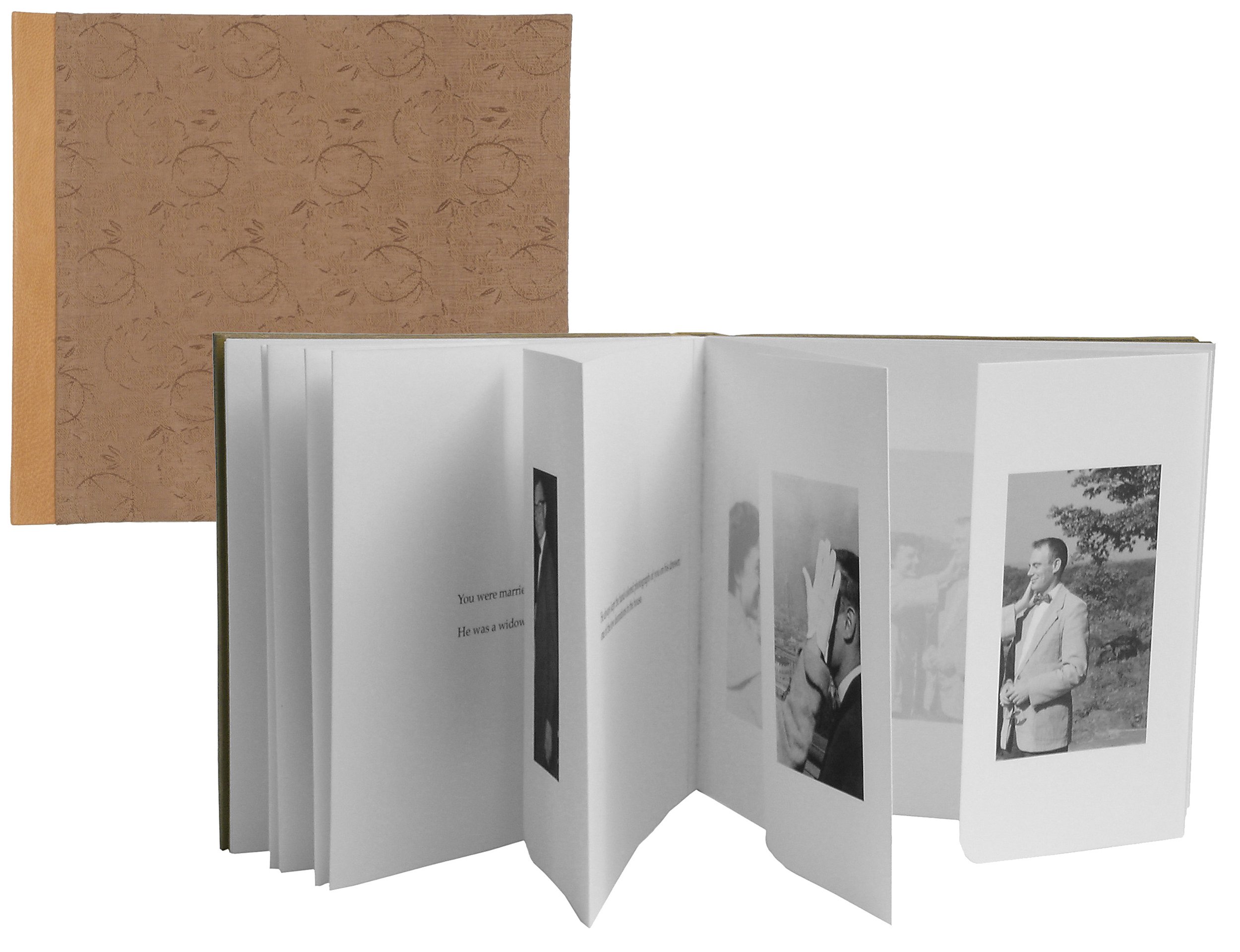
Reunion
Sewn boards binding. Pigment inkjet prints, silk brocade, title blind stamped onto goatskin spine. Created 2006.
7 x 7.5x.5"
Edition of 25
Vintage photographs and brief text document a couple’s many separations and ultimate reunion. I began Reunion shortly after the death of my father. My mother predeceased him by 34 years. He never remarried. I am intrigued with the idea that they are now reunited, at least figuratively, and perhaps in a more tangible form.
Hanmer’s parents shared a great love. Tragically, her mother died young, after just 19 years of marriage. Her father never got over the loss of his beloved Wife, though he lived another 34 years as a widower. In this book Hanmer poignantly shows with faded black and white images, the absence of her mother in photographs of them both during happier times. At the death of her father the two are reunited at long last and the final image shows them both in full color. With simple condensed text and fold-out images that have the effect of tearing the two apart, the impact of the loss and reunion is strongly felt.
Laurie Whitehill Chong, Special Collections Librarian and Curator of Artists’ Books, Fleet Library at RISD

Decoration
Pigment inkjet prints
5 x 10.5 x .25" closed in dust jacket
Removed from dust jacket for display, fully extended 5" x up to 9'
can also be displayed extended into a closed circular shape
Edition of 25. Out of print. One display copy available, very gently worn.
Vintage photographs represent the accomplishments and values of a mid century husband and wife. The title, Decoration, alludes both to being decorated with medals for military service, and to dressing up with fancy clothing and accessories. Images of the woman’s belongings represent what she achieved and what was important to her. These images are presented alongside, and as comparable to, the more public awards the man received. Created 2006.

Ann Black
Accordion book: pigment inkjet prints
6.5 x 20 x 3" fully open
6.3 x 3 x .25” closed
Edition of 20
Text tells the story of a 1930’s small town school teacher and her philandering boyfriend as related by an elderly relative of the artist. The story unfolded while going through a box of family photographs.

Letter Home
Flag book: pigment inkjet prints. Created 2004.
8 x 4.75 x .5” closed
8 x 19 x 3" fully open
Edition of 20, one copy remaining
A young Navy wife’s letter written from Europe to her family on the farm.
The flag book, like other dynamic book structures, has the unfortunate potential to overwhelm content and artistic intent. Not so for Karen Hanmer’s flag book Letter Home. Here the book’s structure and its exterior and interior environments are fully integrated with content to embody and illuminate meaning. Using family photographs and dual, private voices — a letter to family and an interior commentary — Hanmer creates a visual narrative/diorama of Midwestern roots, geographic displacement, familial relationships, personal and interpersonal anxieties, and 1950s cultural transition. The work evokes emotions of longing and loss without being sentimental, as well as hope for the future that is flavored with Midwestern pragmatism. The revelatory quality of Hanmer’s flag book is quite appropriate to its content, creating a satisfying and multi-layered experience for the viewer.
— Max Yela, Head, Special Collections, University of Wisconsin Milwaukee
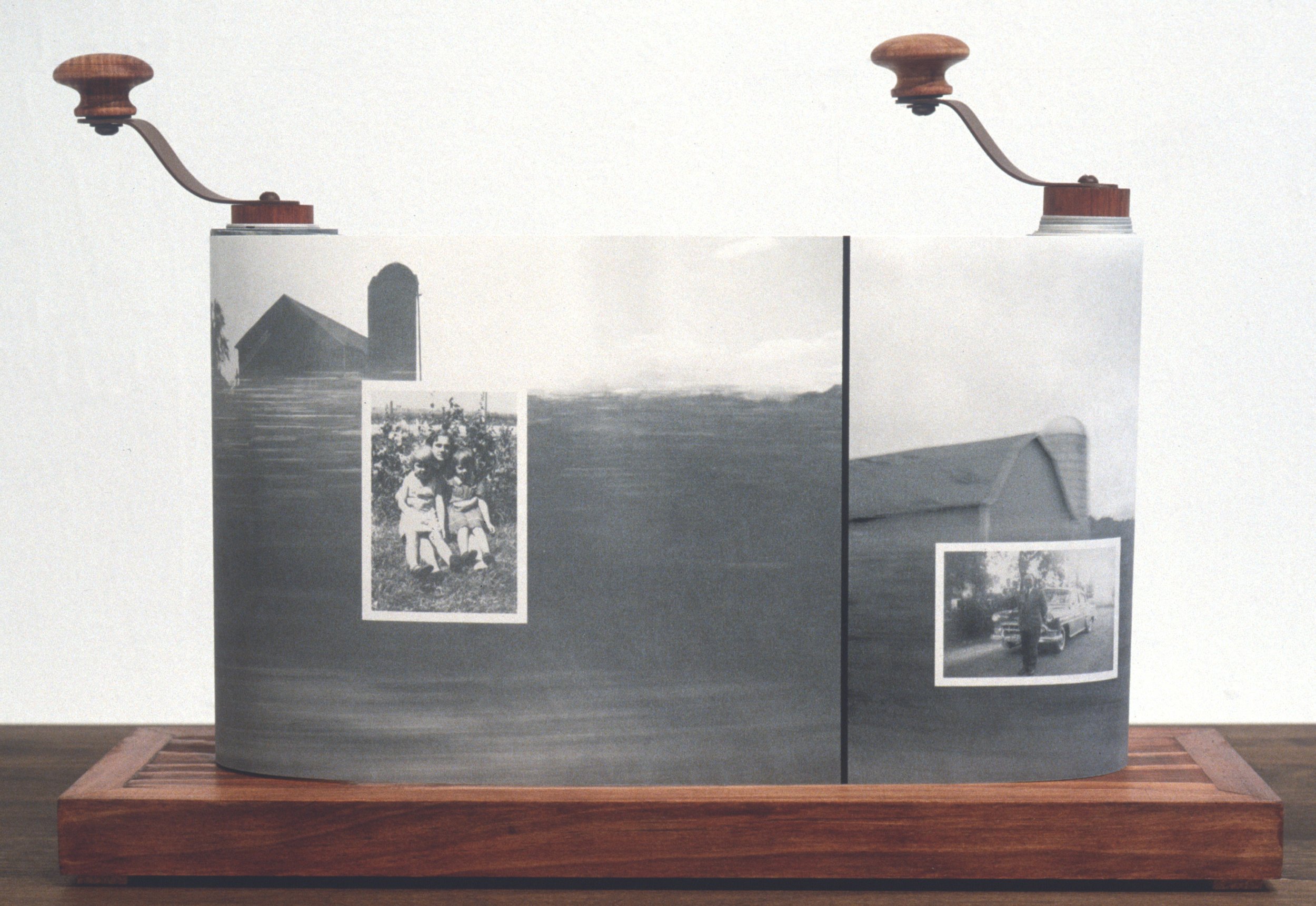
Homestead
Pigment inkjet prints, wood, metal. Created 2001
12 x 17.5 x 5.5", entire scroll is 240" long
Unique artists' book
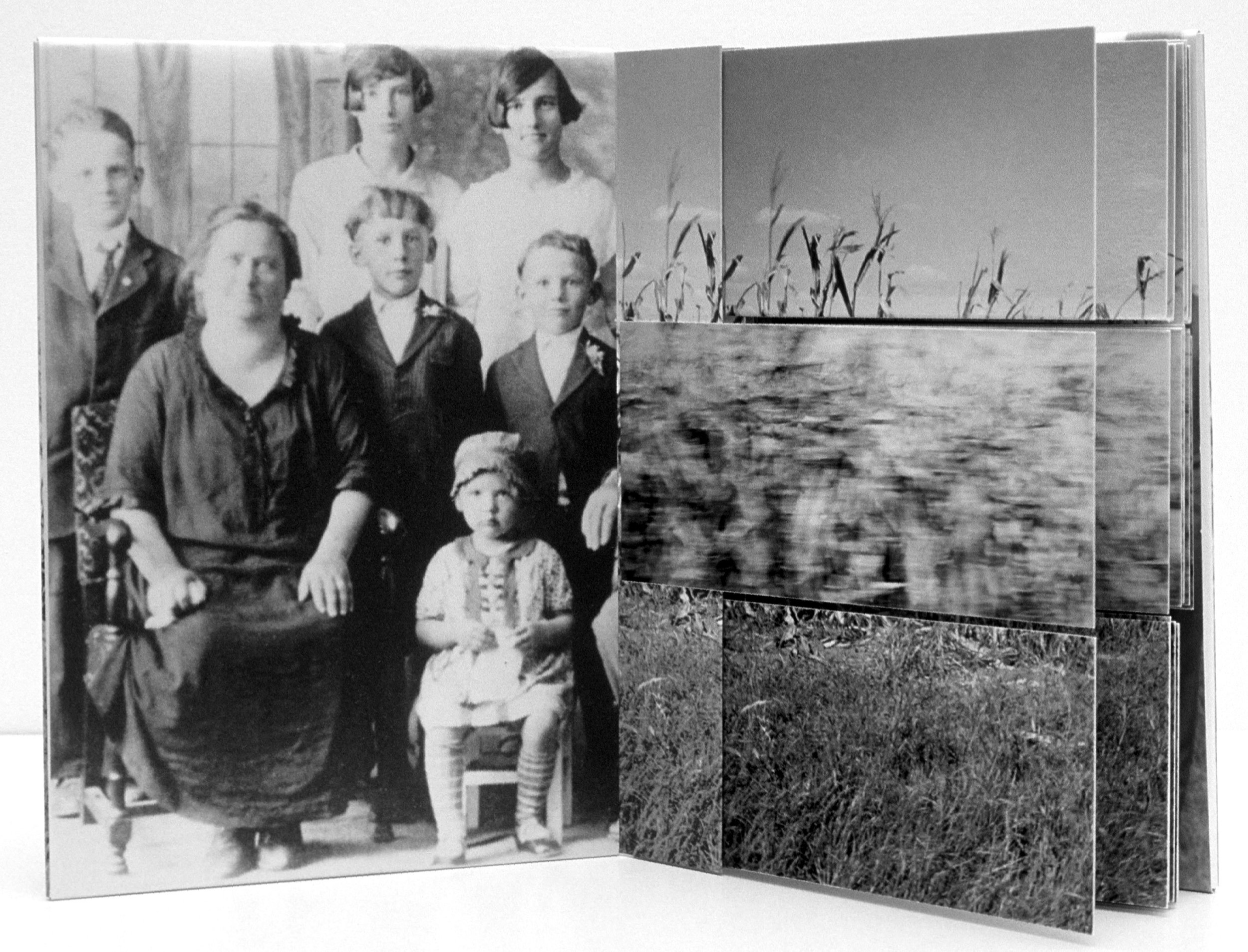
Photos of milestones in the history of a large farming family over a 60 year span in a scroll format, 12 inches visible at one time.
Succession
Flag book: Pigment inkjet prints. Created 2002.
Open size 7 x 5 x 26", closed size 7 x 5x.75"
Edition of 20
Transition from a detailed to a blurred field of corn and back suggests the history of a large, immigrant farming family over a 60 year span. Inside covers depict the family in the late 1920s and the late 1960s.

Bequest
Flag book: Pigment inkjet prints
8 x 19 x 3" fully open
8 x 4.75 x .5” closed
Edition of 20
Text outlines brief history of immigrant farm family and lists the names of three generations. Created 2001.
Flip Farm
Pigment inkjet prints
2x3.5x.5”
Edition of 100
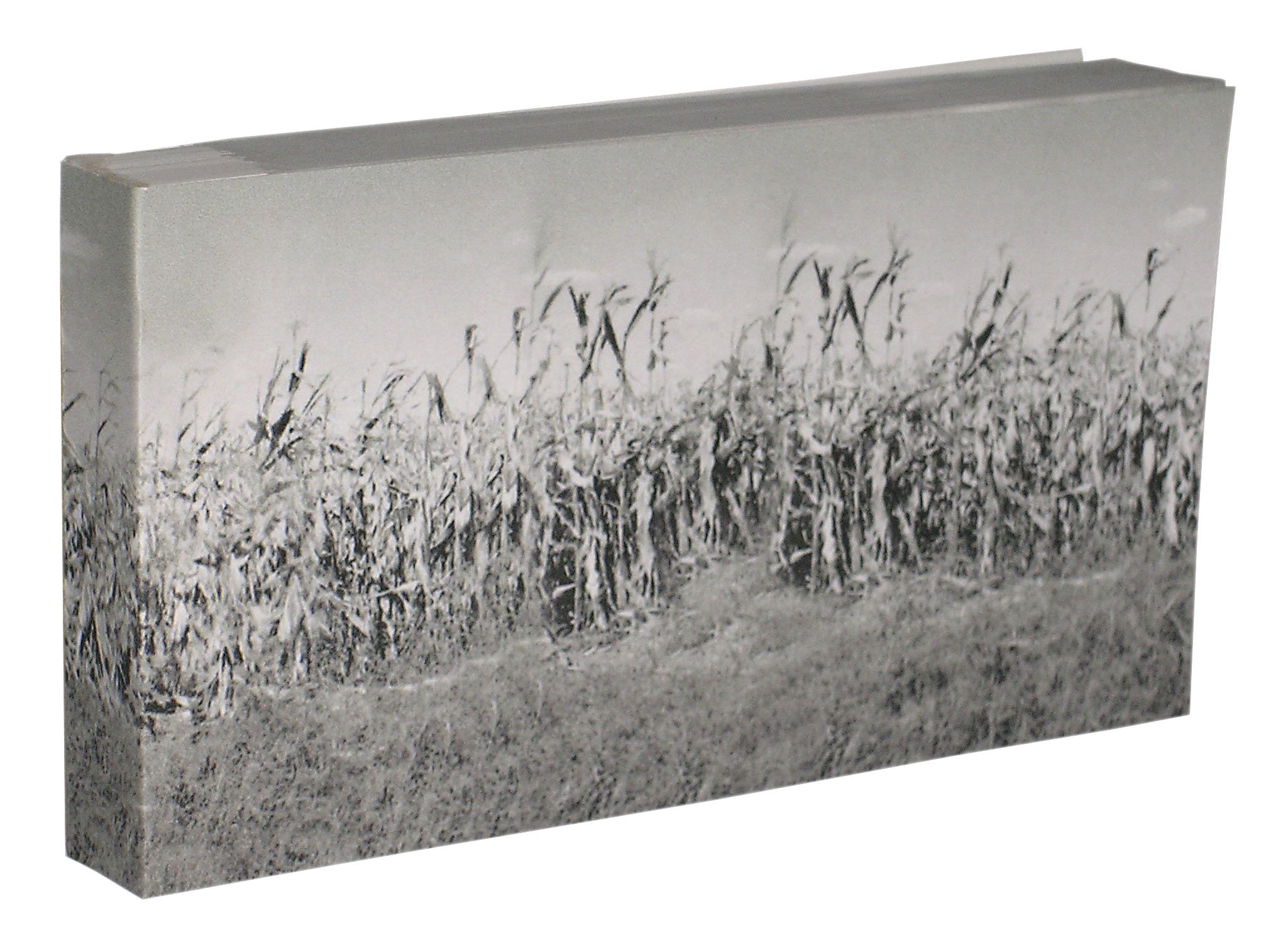
Flip book simulates the experience of driving past a field of corn. Created 2002

Famopily (board game)
Ready to play board game: pigment inkjet prints, binder’s board. Created 1999.
18.75 x 18.75"
Edition of 20. Two remaining copies gently worn from exhibit.
Family scrapbook images on game board, game cards collected by moving about board contain recollections about growing up in the 1960s. From artist's statement: For several years I recorded family stories and my childhood memories. I printed out each on an index card to sort through when I was looking for text for various books I was working on. It struck me that they were like odd trading cards.
The Famopily board game evolved from this idea. Players are members of a family. Mother, Father, Brother and Sister. They roll a die and move about the board collecting and reading aloud cards printed with childhood stories. My military family moved often while I was growing up. By the time I was ten, I had lived in six cities. When a player of Famopily lands on the “Moving Day” space, she must spin the wheel and relocate her playing piece to a different space on the game board. She then loses a turn. This minor inconvenience is intended to give players a small indication of how disruptive and disorienting all that moving around felt.
Karen Hanmer's work is wonderfully playful and sculptural. Interaction is encouraged in a very unique way. These qualities make the pieces quite special in artist book displays. Because we collect game oriented books, the University of Kentucky's Lucille Little Fine Arts Library collections include five of her books.
—Meg Shaw, Art Librarian, Lucille Little Fine Arts Library & Learning Center, University of Kentucky Libraries

Famopily (book)
Inkjet-printed wire bound book with text from game cards and photos from Famopily game board. Created 1999.
7.5 x 15.75" open
7.5 x 8" closed
Edition of 100
From artist's statement for the Famopily board game:
For several years I recorded family stories and my childhood memories. I printed out each on an index card to sort through when I was looking for text for various books I was working on. It struck me that they were like odd trading cards. The Famopily board game evolved from this idea. Players are members of a family. Mother, Father, Brother and Sister. They roll a die and move about the board collecting and reading aloud cards printed with childhood stories.
My military family moved often while I was growing up. By the time I was ten, I had lived in six cities. When a player of Famopily lands on the “Moving Day” space, she must spin the wheel and relocate her playing piece to a different space on the game board. She then loses a turn. This minor inconvenience is intended to give players a small indication of how disruptive and disorienting all that moving around felt.
Karen Hanmer's work is wonderfully playful and sculptural. Interaction is encouraged in a very unique way. These qualities make the pieces quite special in artist book displays. Because we collect game oriented books, the University of Kentucky's Lucille Little Fine Arts Library collections include five of her books.
—Meg Shaw, Art Librarian, Lucille Little Fine Arts Library & Learning Center, University of Kentucky Libraries

Generations
Pigment inkjet prints
Fully open size 6 x 30 x 3"
Edition of 20, one remaining.
Text and photos documenting the connections between three generations of men through reminiscences of hunting and fishing trips. Generations began as a fortieth birthday present for my husband. We had recently helped his father format his genealogical research into a book, and I was touched by numerous photos of fathers and sons hunting and fishing together. I asked my father-in-law to write stories about his times spent hunting and fishing with his father and his son. Snippets of text from these stories join the names of fathers and sons going back seven generations. Created 1998.

Even before you left the farm
Collection of University of Washington
Laser prints in vintage cardboard mounts
8.5 x 30 x 9.5" open
Unique artists' book
Photos of a woman from her birth on the farm to her adult suburban life with husband and children, very brief text discussing her rejection of farm life. Created 1997.
Treasures
Pigment inkjet prints on Japanese paper, sewn at right and left edges. Created 2000.
Open size 9 x 17x.5"
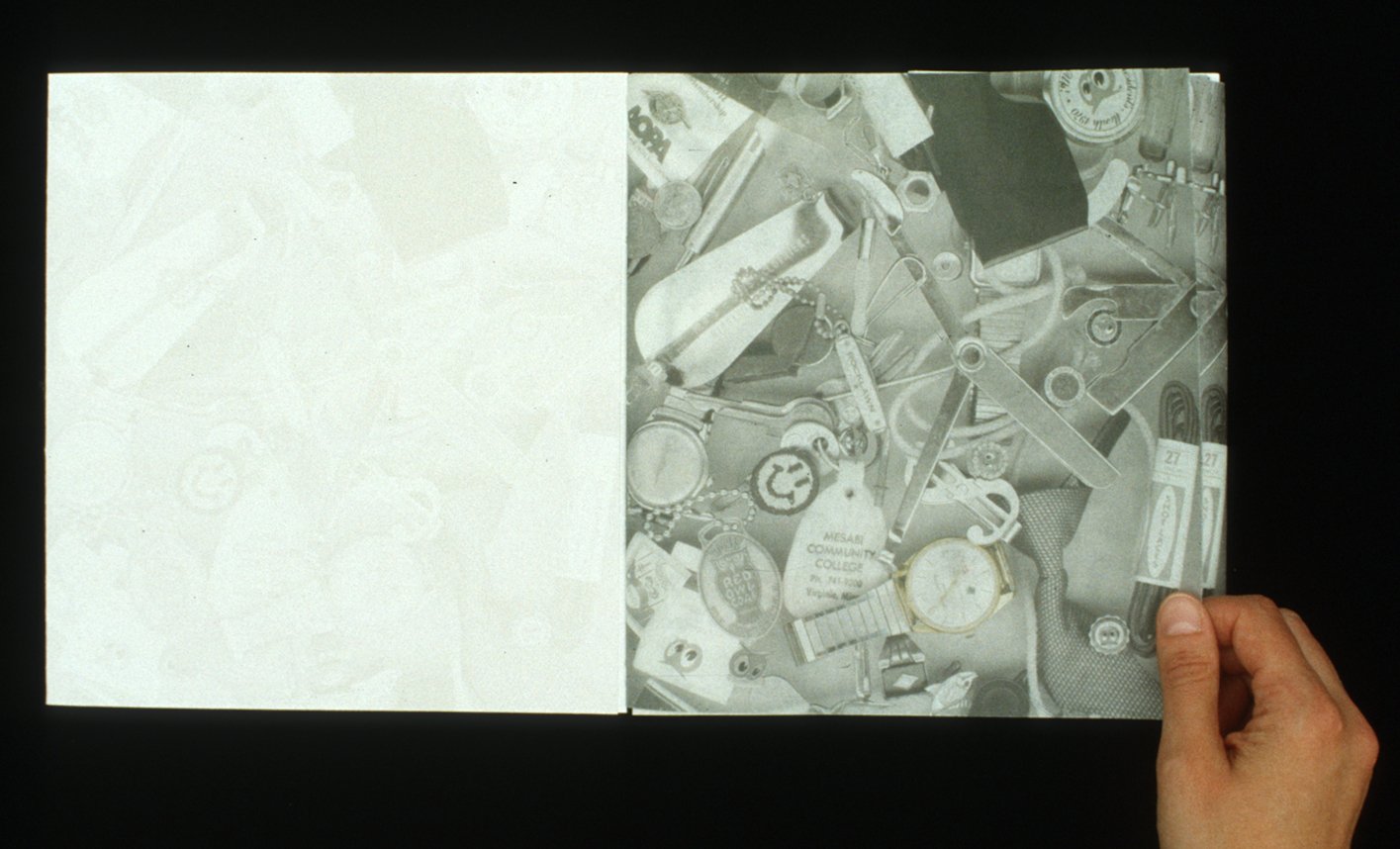
Through the choice of binding and materials, viewer’s motion through this book simulates the experience of rummaging through the items in a loved one’s drawer of ephemera.
To Serve and Protect: Containers, conveyances, and cosmic happenings
Pigment inkjet prints on Mohawk Superfine. 32 pages. Created 2014.
Edition of 100.
7 x 5 x .25”
Deluxe: Sewn Boards binding, covered in full, custom marbled paper by Pamela Smith, Bugra double folio endsheets. Presented in slipcase with marbled paper accent, numbered 1-40.
Chapbook: Pamphlet in inkjet-printed, flower power paper wrapper by the artist, numbered 41-100.
To Serve and Protect: Containers, conveyances, and cosmic happenings began as a response to the theme “vessel.” Vehicles, containers for food, and other period receptacles provide a framework for the artist’s musings on life in the 1960s and 1970s. Thirteen micro essays touch on the Vietnam War, fashion, the Cold War, cuisine, the economy, the women’s liberation movement, and other issues reflecting Americans’ perseverance, and our often misguided quest for peace and stability.